Do You Really Need an Air Purifier? 7 Signs Your Home Air Quality Is Poor

Most of us picture air pollution as something outside: traffic, smog, a smoky sky in August. Yet the air inside a home can carry its own load of dust, dander, smoke and chemical fumes, and it is the air you breathe most of the day.
According to the EPA, Americans spend about 90 percent of their time indoors, where concentrations of some pollutants are often two to five times higher than typical outdoor levels. That does not mean every home needs an air purifier. It does mean a few everyday signs are worth taking seriously.
In this guide
- Seven signs your indoor air may need attention
- What an air purifier can and can't fix
- How to choose one for the room you have in mind
Why indoor air builds up
Newer and renovated homes are built to hold heat and cool air in: better insulation, tighter windows, fewer drafts. That saves energy, but it also means less fresh air replaces the air you already have. Whatever is released indoors tends to stay longer.
Typical culprits are dust and fibers, pet dander, pollen carried in on clothes, smoke and cooking fumes, and volatile organic compounds (VOCs) from paint, furniture and cleaning products. Some settle on surfaces; the finest particles stay in the air for hours.
7 signs your home may need an air purifier
1. You wake up stuffy or with a scratchy throat
If mornings start with a blocked nose or a dry, irritated throat that eases once you are up and about, look at the bedroom. With the door closed overnight, very little air is exchanged, and particles from bedding, carpets and pets collect in the room where you spend seven or eight hours.

A purifier sized for the bedroom and running on a quiet setting keeps filtering while you sleep. Our guide to running an air purifier at night covers placement, noise and light.
2. You share your home with a dog or cat
Pet dander is made of tiny flakes of skin that float easily and settle into sofas, rugs and bedding. You do not have to be allergic to notice the effect: more dust, more hair on dark fabrics, and a smell that returns soon after cleaning.

Filtration captures the dander that is still in the air. Regular vacuuming and washing pet bedding deal with what has already landed.
3. Wildfire smoke reaches your area
Across much of the West, smoke season now comes every year. Smoke contains fine particles (PM2.5): the EPA notes that an average human hair is about 30 times wider than the largest of them. They find their way indoors through gaps around doors and windows.
If you can smell smoke inside during fire season, keep doors and windows closed, check conditions on AirNow's fire and smoke map, and run a purifier with a carbon layer in the room you use most.
4. Smells hang around for hours
Cooking, pets, damp corners and scented candles all leave odors. If a smell is still there long after the source is gone, the air in that room is not being refreshed or filtered enough.

Odors are gases rather than particles, so they need activated carbon, not just a particle filter. How well carbon works depends on how much of it there is and how often you replace it.
5. Dust is back the day after you clean
Wiping and vacuuming remove what has settled. They do little about the fine dust still circulating, which lands again within a day or two.

An air purifier catches part of that dust before it settles. It will not replace cleaning, but it can mean less of it. For more ideas, read why your room gets dusty so quickly.
6. You have just renovated or bought new furniture
Fresh paint, new flooring, cabinets, mattresses and upholstered furniture release VOCs as they off-gas, sometimes for weeks or months. That "new" smell is part of it. The EPA lists eye, nose and throat irritation and headaches among the possible effects.

Ventilate well after any project, and use a purifier with activated carbon to help with lingering fumes.
7. Allergy symptoms don't follow the seasons
Sneezing, itchy eyes or a runny nose in the middle of winter point to something indoors: dust mites, mold spores, pet dander or pollen brought in on shoes and coats.

Lowering the amount of these particles in the air is one part of the answer. If symptoms persist, an allergist can help find the cause. Our article on air purifiers and dust mites explains where filtration helps and where it doesn't.
What an air purifier can and can't do
It can
- Capture airborne dust, dander, pollen and smoke particles
- Reduce odors and some gases with an activated carbon layer
- Keep working overnight and while you are away
It can't
- Replace ventilation or fix the source of a problem
- Remove dust that has already settled
- Add humidity to dry air
The EPA's guide to air cleaners makes the same point: filtration works best together with keeping pollutants out and bringing in fresh air.
How to choose an air purifier
Filtration: particles and odors
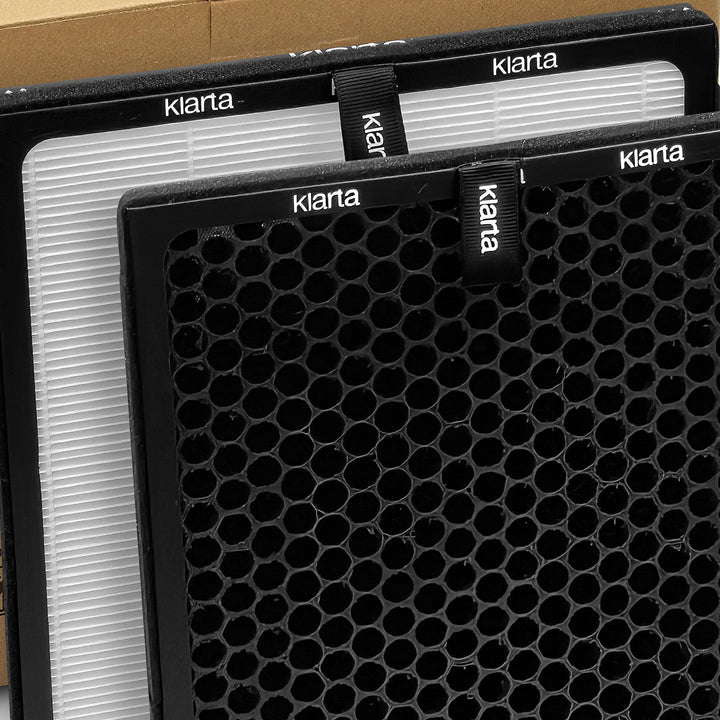
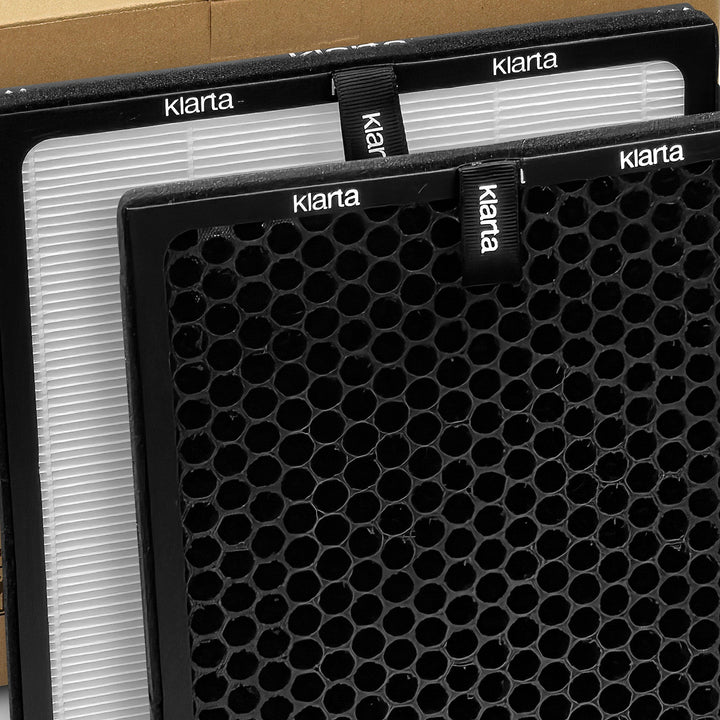
Look for multi-stage filtration: a pre-filter for larger dust and hair, a fine particle filter, and an activated carbon layer for smoke and odors. Check that replacement filters are easy to buy and to fit.
The right size for the room
An undersized purifier will run without making much difference. Compare the clean air delivery rate (CADR) and the recommended room size with your own measurements. Our room size guide walks through it.
Noise and light at night
For a bedroom, check the noise level of the low setting you will actually use and whether the display can be dimmed or switched off.

Filters
Plan for replacements.
The Forste and Stor US manuals recommend replacing the filters at least once a year, sooner with heavy use or smoke. Never wash them: see can you wash an air purifier filter.
Shop filtersWhere Klarta fits
 Forste
 Stor
Stor
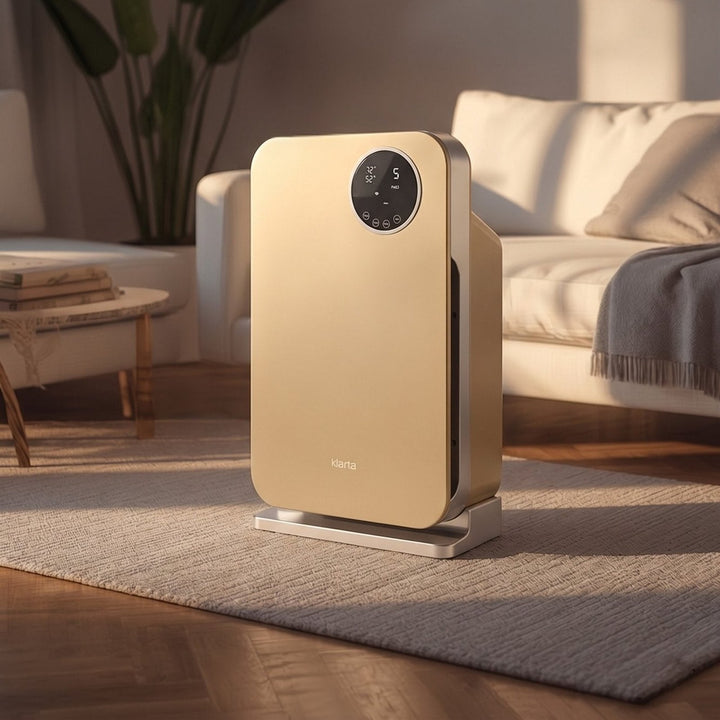
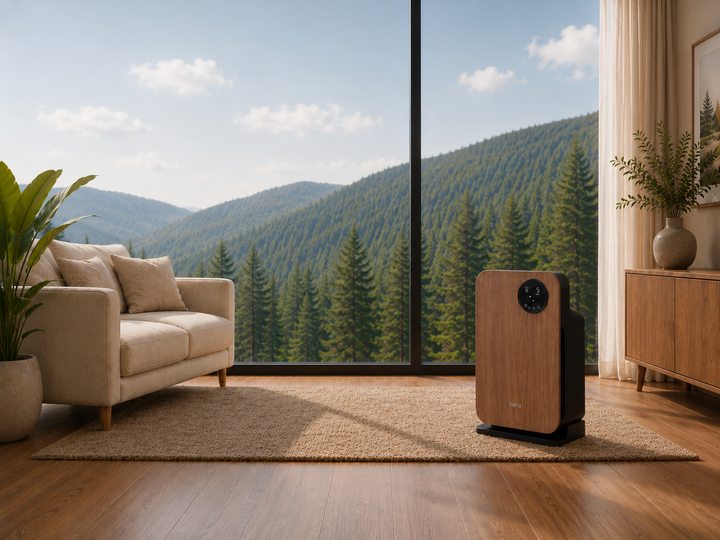
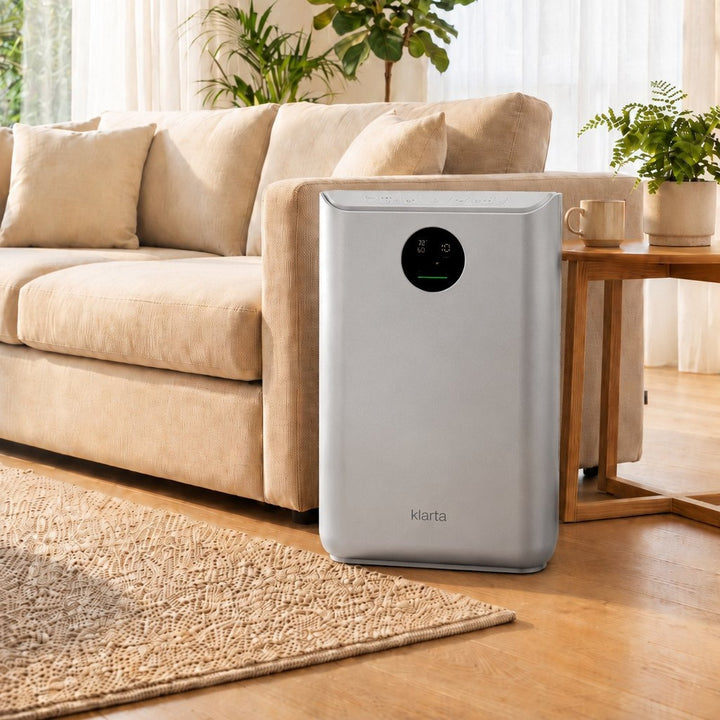
Klarta Forste is made for bedrooms, home offices and most living rooms. A PM2.5 sensor adjusts the fan in auto mode, Sleep mode turns the display off, and it comes in six finishes. Klarta Stor is the larger model for bigger and open-plan spaces. Both use multi-stage filtration with an activated carbon layer and can be controlled from the app.
Not sure which one suits your room? Compare Forste and Stor side by side.
Frequently asked questions
Do air purifiers really work?
They reduce airborne particles in a room when they are sized for it and kept running with clean filters. They can't remove settled dust or replace ventilation, and the EPA notes that results for allergy and asthma symptoms are mixed.
Should an air purifier run all the time?
Particles keep entering the air, so continuous running on a low setting usually works better than short bursts. Read more in should you run an air purifier all day.
Can an air purifier help with smoke?
Yes, a particle filter captures smoke particles and an activated carbon layer helps with the smell. Keep windows closed during heavy smoke and replace filters more often afterwards.
How often should I replace the filters?
Follow your manual. For Klarta Forste and Stor, plan on at least once a year, sooner with pets, smoke or heavy use.


Comments