Clean Air During Fire Season: How Klarta Protects Your Home, Family, and Pets When It Matters Most

When the Air Outside Turns Against You
Every year, fire season arrives earlier, lasts longer, and impacts more of the United States than ever before. What used to feel like a regional issue in places like California or Oregon is now affecting Colorado, Washington, Texas, New York, and even the Midwest.
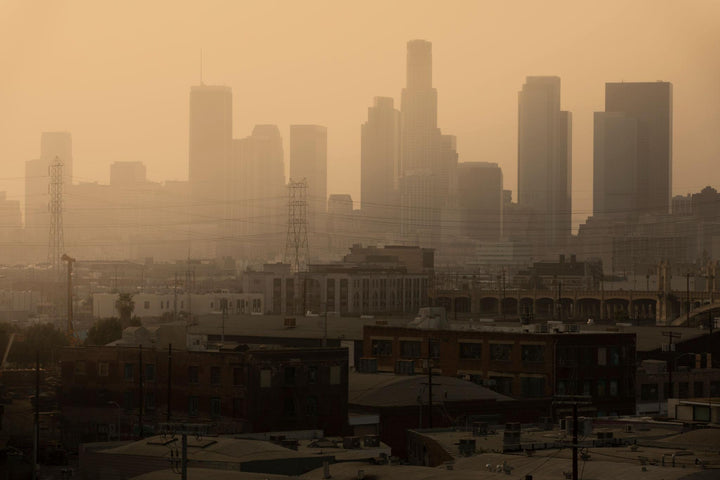
You’ve probably experienced it yourself. The sky turns hazy. The air smells faintly of smoke. Your throat feels dry. Your eyes burn just a little.
The reality is that wildfire smoke is not just unpleasant. It is a serious health risk.
Wildfire smoke contains a mixture of harmful pollutants including particulate matter, carbon monoxide, and other toxic compounds that significantly reduce air quality . The most dangerous of these particles are incredibly small, often referred to as PM2.5, which can travel deep into the lungs and even enter the bloodstream .
This is where indoor air becomes your first line of defense.
Why Indoor Air Quality Matters More During Fire Season
When smoke blankets your city, closing the windows is not enough.
Tiny particles infiltrate homes through:
- Doors and windows
- HVAC systems
- Small cracks and openings
Without proper filtration, indoor air can quickly become unsafe.
Research shows that homes equipped with high-efficiency filtration systems can significantly reduce indoor particle levels compared to those without them . That means what you do inside your home has a measurable impact on your exposure.
This is exactly why more households are turning to solutions like the Klarta system to maintain clean, breathable air year-round.
You can explore options directly at the Klarta Store to find the right purifier for your space.
The States Most Affected by Wildfire Smoke
Fire season no longer stays contained to one region.
Western U.S. Hotspots
- California
- Oregon
- Washington
- Colorado
- Arizona
These states deal with direct wildfire exposure, often for weeks or months at a time.
Expanding Impact Zones
- Texas
- Minnesota
- Illinois
- New York
Smoke now travels thousands of miles. In recent years, cities far from fires have experienced hazardous air quality due to drifting smoke clouds.
In one case, air quality alerts in New York were triggered by Canadian wildfires, with pollution levels reaching unhealthy ranges for sensitive groups .
Fire season is no longer local. It is national.
The Hidden Health Effects on Families
Wildfire smoke affects everyone, but some people are more vulnerable than others.
Short-Term Effects
- Eye, nose, and throat irritation
- Coughing and wheezing
- Headaches and fatigue
Long-Term Risks
Repeated exposure to fine particles has been linked to:
- Respiratory disease
- Cardiovascular issues
- Increased inflammation in the body
Emerging research even suggests wildfire smoke may contribute to neurological risks over time, highlighting just how serious prolonged exposure can be.
Who Is Most at Risk?
- Children
- Pregnant women
- Older adults
- Anyone with asthma or heart conditions
Even healthy individuals can experience symptoms when air quality declines.
That’s why creating a clean indoor environment is not just about comfort. It is about protection.
What About Pets? They’re Even More Vulnerable

If you have pets at home, wildfire smoke is an even bigger concern.
Animals breathe faster than humans, which means they can inhale more harmful particles in a shorter amount of time .
Common Signs of Smoke Exposure in Pets
- Coughing or gagging
- Difficulty breathing
- Red or watery eyes
- Fatigue or reduced appetite
Smoke can irritate their respiratory system and trigger inflammation, especially in older pets or those with existing health conditions .
Birds, small animals, and flat-faced dog breeds are particularly sensitive.
If you feel the effects of poor air quality, your pets are likely feeling it more.
Why Air Purifiers Are Essential During Fire Season
When outdoor air becomes unsafe, your goal is simple:
Create a clean air sanctuary inside your home.
High-quality air purifiers help by:
- Capturing fine particulate matter (PM2.5)
- Removing smoke odors
- Reducing airborne toxins
This is where Klarta stands out.
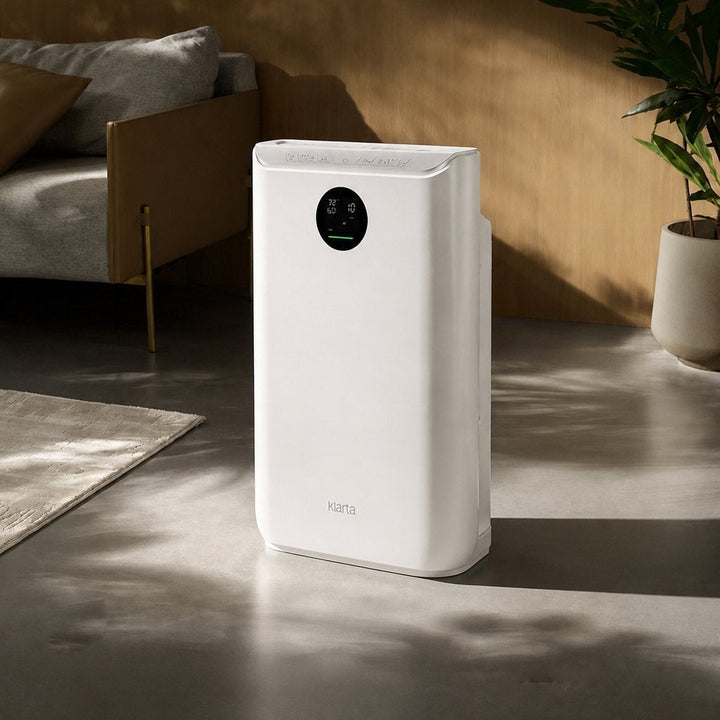
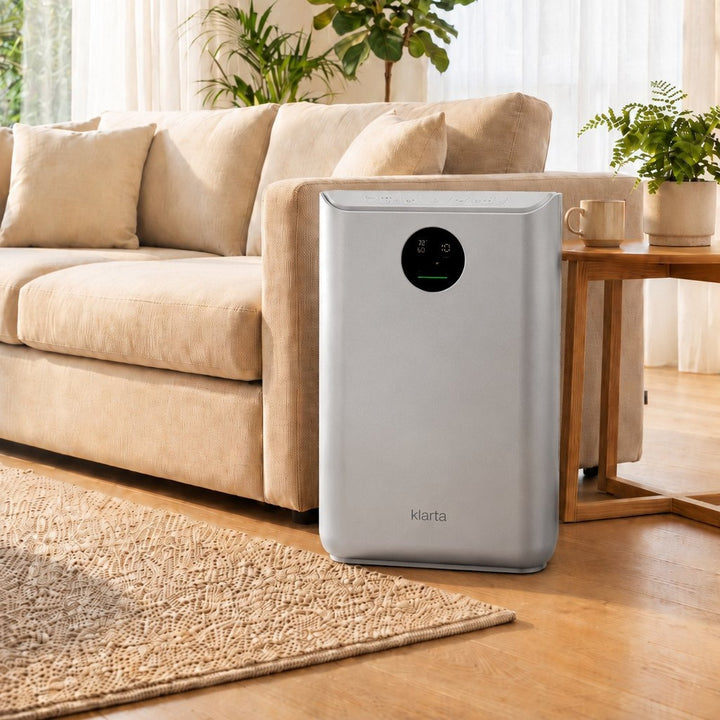
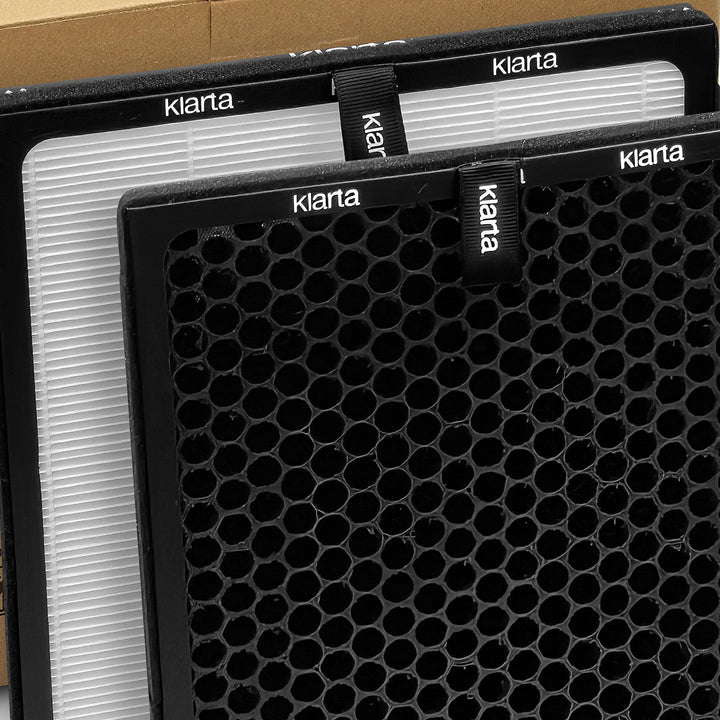
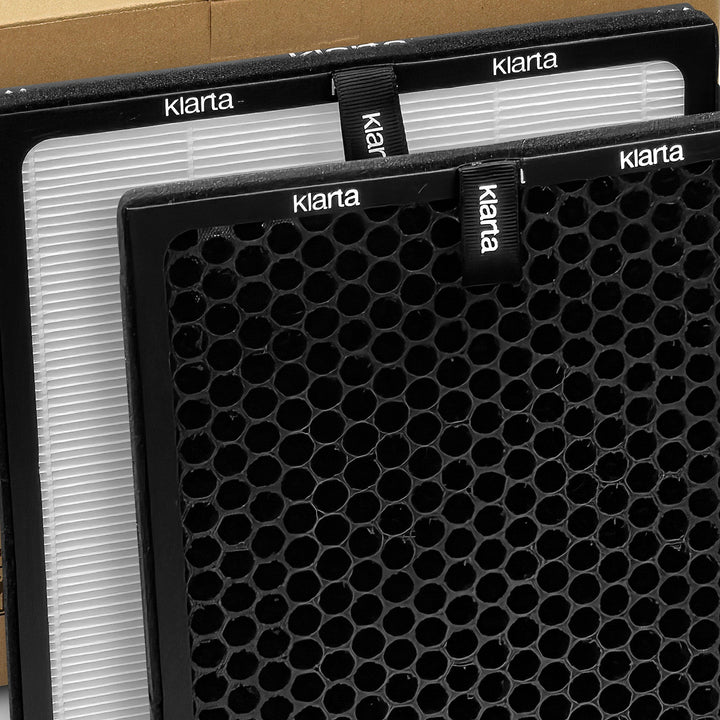
Klarta purifiers are designed to combine high-efficiency filtration with a design that fits seamlessly into your home. Instead of hiding bulky machines, you can integrate something that actually enhances your space.
More importantly, they are built for real-world conditions like wildfire smoke, where filtration performance matters.
If you want to see how Klarta systems work in your space, visit the Klarta Store.
Creating a Clean Air Plan for Fire Season
A purifier is powerful, but it works best as part of a broader strategy.
1. Keep Windows and Doors Closed
Limit smoke entry during high AQI days.
2. Run Your Air Purifier Continuously
Air needs constant circulation to stay clean.
3. Create a “Clean Room”
Choose one room to prioritize with:
- Sealed windows
- Minimal openings
- A high-performance purifier
4. Limit Outdoor Exposure
Especially for children, pets, and anyone with respiratory conditions.
5. Monitor Air Quality
Pay attention to AQI alerts in your area.
When AQI rises above 100, sensitive groups should reduce exposure. Above 150, it becomes unhealthy for everyone .
The Emotional Side of Clean Air
Clean air is something we often take for granted until it’s gone.
During wildfire season, it becomes personal:
- You worry about your kids breathing at night
- You notice your dog coughing more than usual
- You hesitate before opening the door
Having control over your indoor air changes that.
It creates a sense of calm in an otherwise uncertain environment.
Why Klarta Is Built for Moments Like This
Klarta is not just about everyday air quality. It is about being prepared when conditions change.
What makes it different:
- High-efficiency filtration capable of handling smoke particles
- Quiet operation for continuous use
- A design that fits naturally into your home
Instead of reacting to poor air quality, you stay ahead of it.
You can explore the full lineup at the Klarta Stor and choose the right system for your space.
Final Thoughts: Clean Air Is No Longer Optional
Wildfire smoke is becoming a regular part of life across the U.S.
From California to Colorado to New York, millions of people are experiencing poor air quality events each year.
The good news is that you have more control than you think.
By investing in clean indoor air, you are:
- Protecting your health
- Safeguarding your family
- Taking care of your pets
And in moments when the air outside is unpredictable, that control matters more than ever.
Clean air is no longer just a luxury. It is part of living well.
Sources:
- Centers for Disease Control and Prevention (CDC) – Wildfire Smoke & Health Effects
https://www.cdc.gov/climate-health/php/effects/wildfires.html - Environmental Protection Agency (EPA) – Wildfire Smoke and Indoor Air Quality
https://www.epa.gov/wildfire-smoke-course - AirNow (U.S. Government AQI Resource) – Air Quality Index Basics
https://www.airnow.gov/aqi/aqi-basics/ - Morris Animal Foundation – Effects of Wildfire Smoke on Animals
https://www.morrisanimalfoundation.org/article/wildfire-smoke-effects-on-animals - American Kennel Club (AKC) – Wildfire Smoke and Pets
https://www.akc.org/expert-advice/health/wildfires-smoke-dogs/ - Harvard T.H. Chan School of Public Health – Health Effects of PM2.5
https://www.hsph.harvard.edu/c-change/subtopics/air-pollution-health/ - ScienceDirect – Long-term Health Impacts of Wildfire Smoke Exposure
https://www.sciencedirect.com/science/article/pii/S0160412021003925
Share:
Read also
Wildfire smoke
Air Purifier for Airbnb Smoke: A Host's Practical Guide
Wildfire smoke
Why Does My House Smell Like Smoke With No Fire?
Wildfire smoke
Air Purifier for Wildfire Smoke: How to Choose and Use One

Comments