What Size Air Purifier Do I Need? A Simple Room Size and CADR Guide
Choosing an air purifier should be simple: measure your room, find a model with enough power and start breathing cleaner air. Instead, shoppers are often met with conflicting coverage claims, unfamiliar terms and air purifiers that claim to clean anywhere from 200 to more than 2,000 square feet.
The problem is that room coverage does not tell the whole story. An air purifier may technically circulate some air in a large space while still being too underpowered to clean that space effectively.
If you are wondering what size air purifier you need, the best place to start is with three factors:
-
The square footage of your room
-
Your ceiling height
-
The purifier’s Clean Air Delivery Rate, or CADR
This guide explains how to use those measurements, when to size up and how to choose between a smaller purifier and a high-capacity model.
Quick answer: What size air purifier do I need?
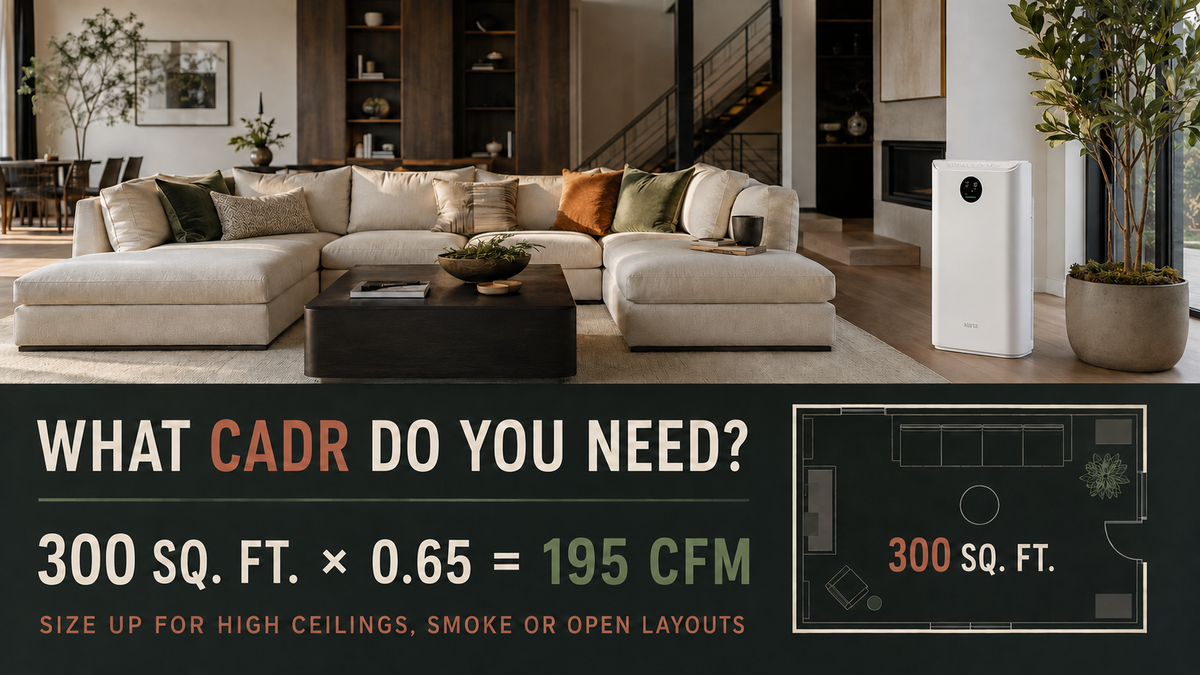
For a room with a standard eight-foot ceiling, look for a smoke CADR that is at least two-thirds of the room’s square footage.
For example:
| Room size | Recommended minimum CADR |
|---|---|
| 100 sq. ft. | 65 CFM |
| 200 sq. ft. | 130 CFM |
| 300 sq. ft. | 195 CFM |
| 400 sq. ft. | 260 CFM |
| 500 sq. ft. | 325 CFM |
| 600 sq. ft. | 390 CFM |
These estimates follow guidance published by the U.S. Environmental Protection Agency and the Association of Home Appliance Manufacturers.
If your ceilings are higher than eight feet, your home has an open floor plan or you are dealing with heavy smoke, severe allergies or a high concentration of pet dander, choose a more powerful air purifier.

Step 1: Calculate the size of your room
Measure the length and width of the room in feet. Multiply the two numbers to determine the room’s square footage.
Room length × room width = square footage
A bedroom that measures 12 feet by 14 feet has an area of:
12 × 14 = 168 square feet
For a closed bedroom with an eight-foot ceiling, you would look for an air purifier with a smoke CADR of at least 112 CFM.
Do not measure only part of a connected space. If your kitchen, dining room and living room share an open floor plan without closed doors, calculate the full area that the purifier will serve.
For example:
-
Living room: 250 square feet
-
Kitchen: 150 square feet
-
Dining area: 120 square feet
-
Combined open space: 520 square feet
In this case, you should shop for a large-room air purifier capable of handling the combined 520-square-foot area.

Step 2: Account for ceiling height
Most room-size recommendations assume an eight-foot ceiling. A room with a 10-foot ceiling contains 25% more air than a room with the same floor area and an eight-foot ceiling.
You can adjust your room size with this formula:
Square footage × ceiling height ÷ 8 = adjusted room size
A 300-square-foot living room with 10-foot ceilings would have an adjusted room size of:
300 × 10 ÷ 8 = 375 square feet
Instead of choosing an air purifier based on 300 square feet, look for one that can effectively clean at least 375 square feet.
This adjustment is especially important in lofts, vaulted living rooms, basements and newer open-concept homes.
Step 3: Understand CADR before comparing air purifiers
CADR stands for Clean Air Delivery Rate. It measures how much filtered air an air purifier delivers per minute.
A higher CADR generally means the purifier can remove airborne particles faster or serve a larger room.
Air purifiers may have separate CADR ratings for:
-
Smoke, representing smaller airborne particles
-
Dust, representing medium-sized particles
-
Pollen, representing larger particles
If you are concerned about wildfire smoke, PM2.5 or other fine airborne particles, pay close attention to the smoke CADR. If seasonal pollen is your main concern, compare the pollen rating as well.
CADR is useful because it considers both filtration efficiency and airflow. A filter may be highly efficient, but it cannot clean a room effectively if the purifier does not move enough air through it.
Do not rely only on the advertised maximum coverage
Some air purifiers advertise very large coverage areas based on cleaning the room’s air only once per hour. That can make a small purifier appear suitable for an entire apartment.
For everyday airborne dust, that level of circulation may provide some benefit. However, it may not be enough for someone dealing with persistent allergies, wildfire smoke, pet dander or poor outdoor air quality.
The number of times a purifier can filter the room’s air in one hour is called air changes per hour, or ACH.
A purifier may claim coverage for:
-
1 ACH: The room’s air is filtered approximately once per hour
-
2 ACH: Approximately twice per hour
-
4 ACH: Approximately four times per hour
-
5 ACH: Approximately five times per hour
A higher ACH means the purifier processes the room’s air more frequently. For high-pollution conditions, more frequent filtration is generally preferable.
Before buying, check whether the advertised square footage is based on one, two or nearly five air changes per hour. Two purifiers may both claim to cover 800 square feet while providing very different cleaning speeds.
Should you buy a larger air purifier than you need?
In many cases, yes. Choosing a purifier with extra capacity offers several practical benefits.
A larger purifier can clean the room faster when pollen, smoke or indoor particle levels rise. It may also maintain clean air at a lower fan speed, which can reduce noticeable noise while you work, relax or sleep.
Sizing up makes particular sense when:
-
You have pets
-
You experience seasonal allergies
-
You live in an area affected by wildfire smoke
-
Your home is near a busy road
-
You frequently cook
-
You have an open floor plan
-
Your ceilings are higher than eight feet
-
You want to operate the purifier quietly at night
The goal is not to buy the largest purifier available. It is to choose enough capacity that the unit does not have to run at maximum speed constantly just to keep up.

What size air purifier is best for a bedroom?
Most bedrooms range from approximately 100 to 300 square feet. A compact purifier can work well in this setting as long as its CADR matches the room.
A bedroom purifier should also offer:
-
Quiet operation
-
Dimmable or minimal display lighting
-
Multiple fan speeds
-
Fine particle filtration
-
Automatic operation or air-quality sensing
-
A filter replacement indicator
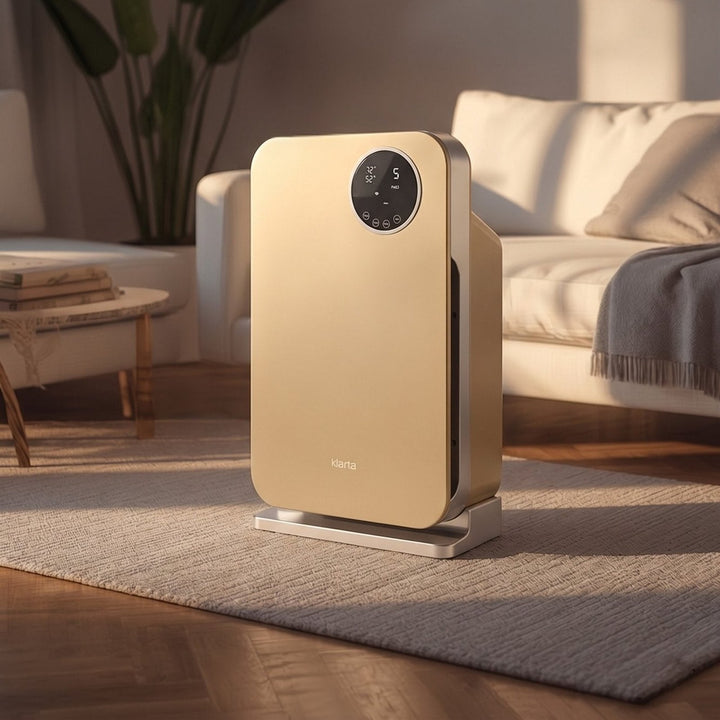
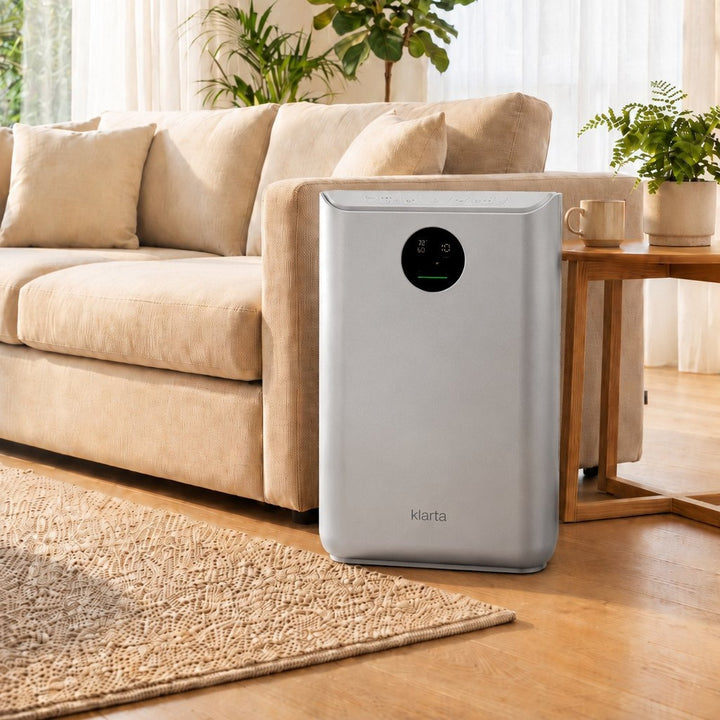
The Klarta Forste Smart Air Purifier is designed for bedrooms, home offices and medium-sized rooms. It combines a fine particle filter with activated carbon filtration, smart controls and quiet operation.
Place a bedroom air purifier where its intake and outlet are not blocked by curtains, bedding, furniture or a wall. Avoid hiding it behind a nightstand or pushing it tightly into a corner.
What size air purifier is best for a living room?
Living rooms often need more power because they are larger, have more foot traffic and may connect directly to kitchens or dining areas.
Measure the entire usable space, including connected areas without doors. Then account for ceiling height and select a purifier with enough CADR for the adjusted room size.
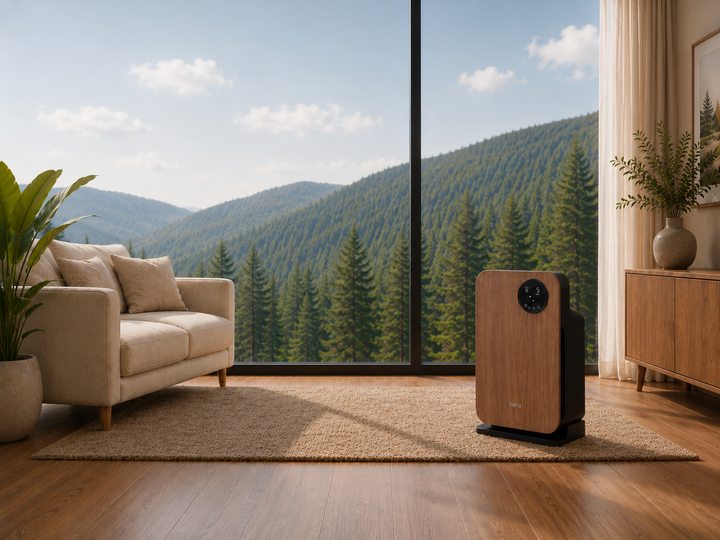
For larger living rooms and open spaces, the Klarta Stor Smart Air Purifier offers higher airflow and a CADR of 600 m³/h. It is designed for larger rooms where a compact purifier may not circulate enough air to keep up.
Activated carbon filtration is also valuable in living areas because it can help reduce certain household odors and gaseous pollutants. Particle filtration is designed for airborne particles, while activated carbon serves a different purpose. A multi-stage system gives you broader filtration than a particle filter alone.
Do you need one air purifier for every room?
One air purifier usually cannot clean an entire home effectively when doors and walls separate the rooms.
Air does not move freely enough between a closed bedroom, hallway and living room for one unit to provide equal filtration everywhere. A large purifier placed in the living room may clean that open area well while providing limited benefit in a bedroom behind a closed door.
You may need more than one purifier when:
-
Family members spend time in separate rooms
-
Bedroom doors remain closed overnight
-
Your home has multiple floors
-
Allergies are severe in more than one area
-
Smoke or odors enter from different parts of the home
If you are starting with one unit, place it in the room where you spend the most time. For many households, that means the bedroom or living room.
What type of filter should you choose?
Room size determines how much power you need, but the filter determines what the purifier can capture or reduce.
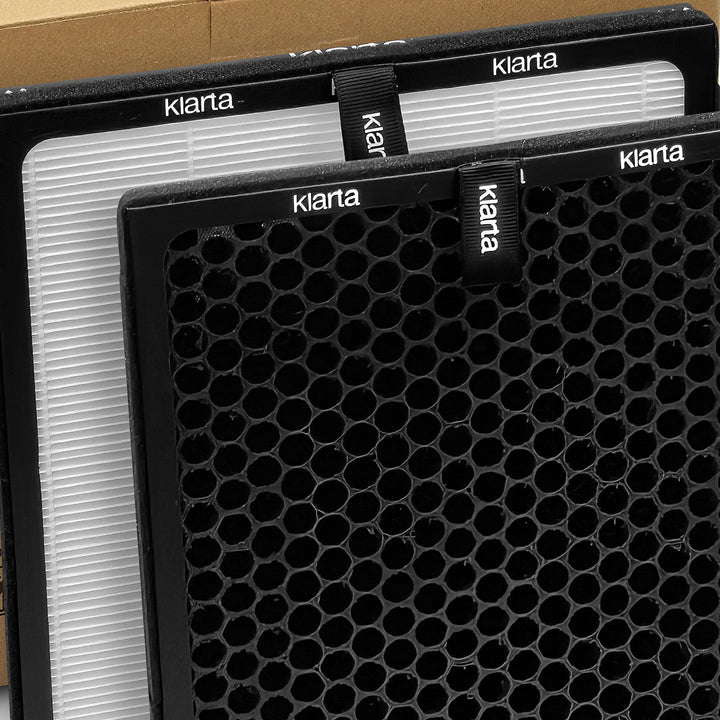
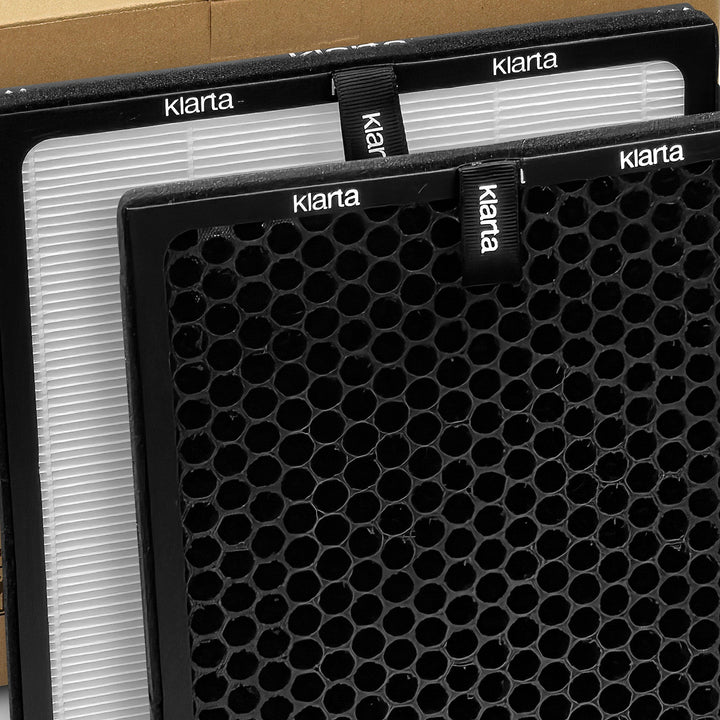
Look for a multi-stage filtration system that includes:
Particle filtration
Fine particle filters are designed to capture airborne particles such as pollen, dust, smoke particles and some airborne pet dander. According to the EPA, portable air cleaners with high-efficiency filters often achieve high particle CADR ratings.
Activated carbon
Activated carbon can help reduce certain gases and odors. This is useful for cooking smells, pet odors, smoke and some volatile organic compounds.
Carbon does not replace particle filtration. The two filter types address different indoor air-quality concerns.
Pre-filtration
A pre-filter captures larger material such as hair, lint and visible dust before it reaches the main filter. This can help protect the main filter and support consistent airflow.
Air purifier placement matters
Even a correctly sized purifier will underperform if airflow is blocked.
For better circulation:
-
Leave open space around the air intake and outlet
-
Keep the unit away from curtains
-
Do not place it under a table
-
Keep doors and windows closed during poor outdoor air quality
-
Place it in the room where people spend the most time
-
Run it continuously when airborne pollution is elevated
-
Use a higher speed when cooking, cleaning or when outdoor smoke enters the home
The EPA notes that higher fan speeds and longer operating times generally increase the amount of air filtered.
Final checklist before you buy
Before choosing an air purifier, answer these questions:
-
What is the room’s total square footage?
-
Is the ceiling higher than eight feet?
-
Is the space open or separated by doors?
-
What is the purifier’s CADR?
-
How many air changes per hour is the coverage claim based on?
-
Does it use a fine particle filter?
-
Does it include activated carbon for odors and gases?
-
Is it quiet enough to run consistently?
-
How frequently will the filters need to be replaced?
-
Is it powerful enough for periods of smoke, pollen or elevated indoor pollution?
The best air purifier is not simply the one with the biggest coverage number. It is the model that provides enough clean airflow for your actual room, uses the right filtration and is quiet and convenient enough to run every day.
For bedrooms, offices and medium-sized spaces, explore the Klarta Forste Smart Air Purifier. For larger living rooms and open spaces, compare the higher-capacity Klarta Stor Smart Air Purifier.
To compare room coverage, airflow and night settings in one place, explore our air purifiers for home.

Comments