How to Choose an Air Purifier for a Hair or Beauty Salon

A hair salon air purifier can help with some airborne particles and, with suitable gas-filtering media, certain odors or gases. Its role is to supplement the salon's air-quality controls. Start by identifying what your services release, how the room is ventilated and what a proposed filter is designed to capture. A room purifier cannot replace ventilation or an assessment of workplace chemical exposure.

What should a hair salon air purifier filter?
Hair and beauty services can create different air-quality concerns. Particle filtration and gas filtration serve different purposes, so look beyond a general promise of cleaner air.
| Concern | What to check |
|---|---|
| Airborne particles | A suitable particle filter and enough clean air delivery for the room. |
| Chemical vapors and certain odors | Source control, ventilation and gas-filter performance for the substances involved. |
| Emissions at a treatment station | Whether local exhaust is needed to capture them close to where they are released. |
| Hair and debris on floors or furniture | Routine surface cleaning; a room purifier does not replace it. |
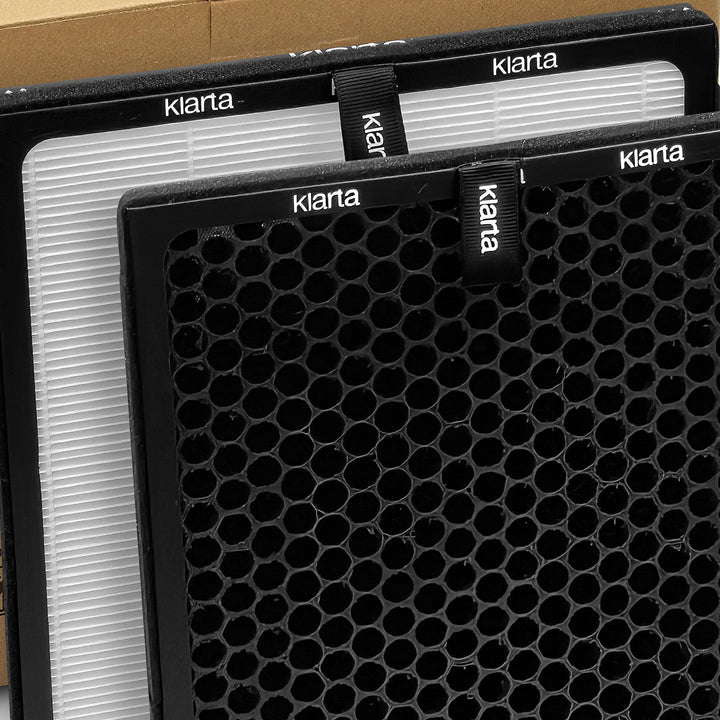
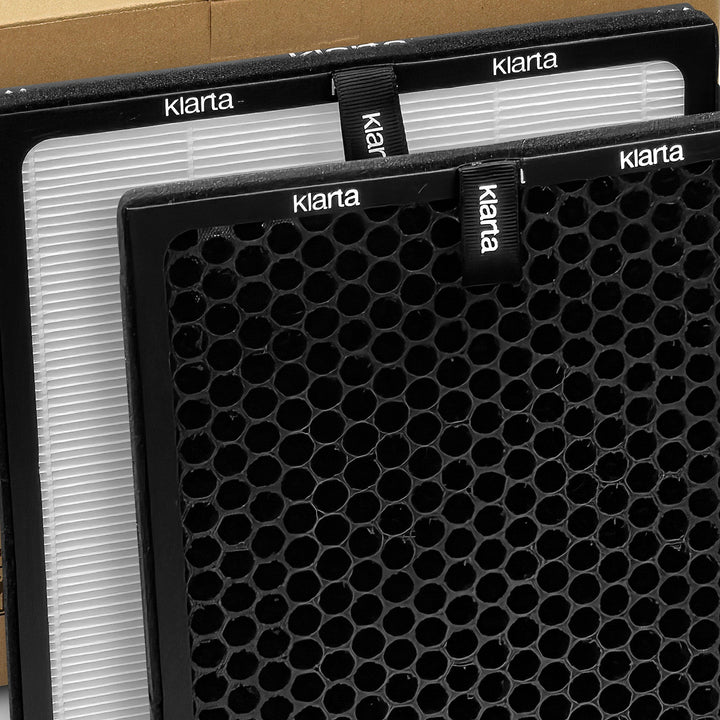
Particle filters capture particles; they do not remove gases such as VOCs. Activated carbon or other appropriate sorbent media may address certain gases, but performance depends on the media and the substance. The EPA's guide explains these filtration differences and notes that CADR rates particle removal, not gas removal. A high CADR alone does not tell you how well a unit handles salon vapors.
Why ventilation matters in a hair or beauty salon
Before buying equipment, review the safety data sheets for the products used at each station. List the services performed, where products are mixed and how often they are used. Give that information to the professional assessing your ventilation so the design reflects the work happening in the space.
Some hair-smoothing products can release formaldehyde. OSHA's guidance for hair salons addresses exposure assessment, ventilation in mixing and treatment areas and other controls for these products. Buying a portable air purifier does not establish that workplace exposure requirements are met.
For salons that also offer nail services, OSHA's nail-salon guidance emphasizes ventilation and work practices, including keeping product containers closed and using available exhaust systems. Review nail stations separately from hair stations; one room device should not be assumed to cover every process.

How to choose an air purifier for a hair salon
For supplemental particle filtration, measure the floor area and ceiling height of the space the device will serve. Include connected areas, and note any separate treatment rooms. Compare CADR and the conditions behind the coverage claim rather than relying on the largest square-foot number in the listing.
Noise matters during consultations and treatments, so ask about airflow at a setting staff will actually use. Maximum airflow and the quietest noise figure usually describe different settings. Our room-size and CADR guide explains the basic sizing measurements; it is not a design standard for salon ventilation.
Also check filter availability, replacement instructions and the space needed around the intake and outlet. Plan a location that leaves walkways clear and allows staff to access the filters without moving treatment equipment.

What to check before choosing an air purifier for a beauty salon
- Filter purpose: Which particles or gases does the manufacturer identify, and what test information supports those claims?
- Operating conditions: What fan speed and room assumptions are used for the stated performance?
- Maintenance: Who will inspect the filters, order replacements and record changes?
- Controls: Can staff select a consistent operating setting without interrupting appointments?
- Workplace use: Does the manufacturer allow the intended use, and what warranty terms apply?
Do not use a particle reading as a chemical-exposure assessment. A PM2.5 display concerns airborne particles; it does not establish the concentration of every gas from salon products. Follow the assessment methods appropriate to the substances and services involved.

Keep the daily routine practical
Assign someone to check that ventilation is operating, keep openings unobstructed and maintain filtration equipment according to its instructions. Keep product storage and surface cleaning in the same routine. If you change services or introduce different chemicals, review the controls for that work rather than simply increasing a purifier's fan speed.
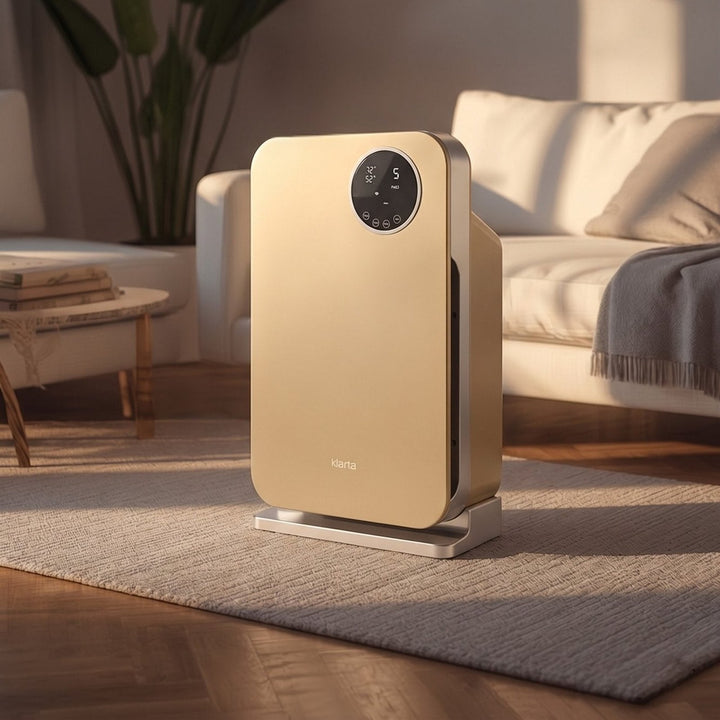
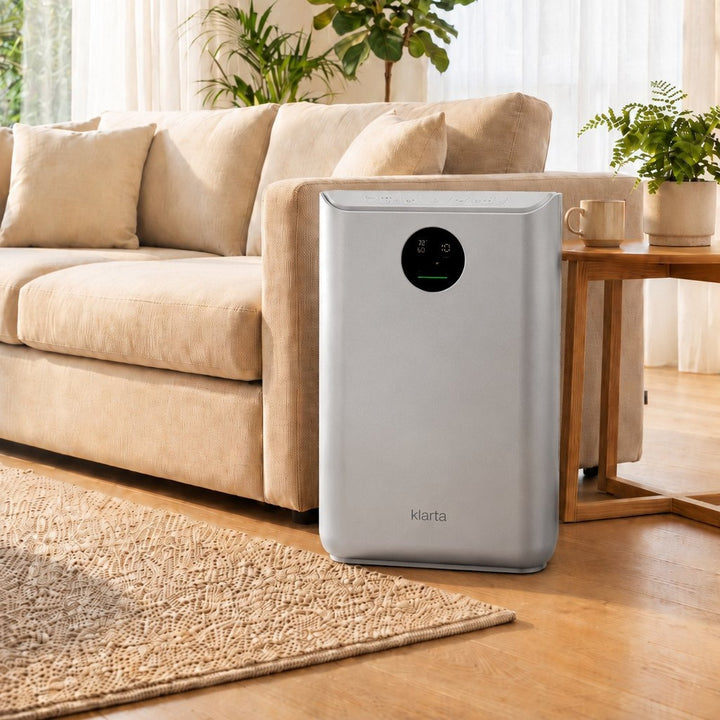
Once those needs are clear, compare our Klarta air purifiers for supplemental room particle filtration. Review the model's specifications and intended use alongside your salon's ventilation plan before deciding whether it fits.


Comments