Should You Run an Air Purifier All Day? Cost, Safety and Effectiveness
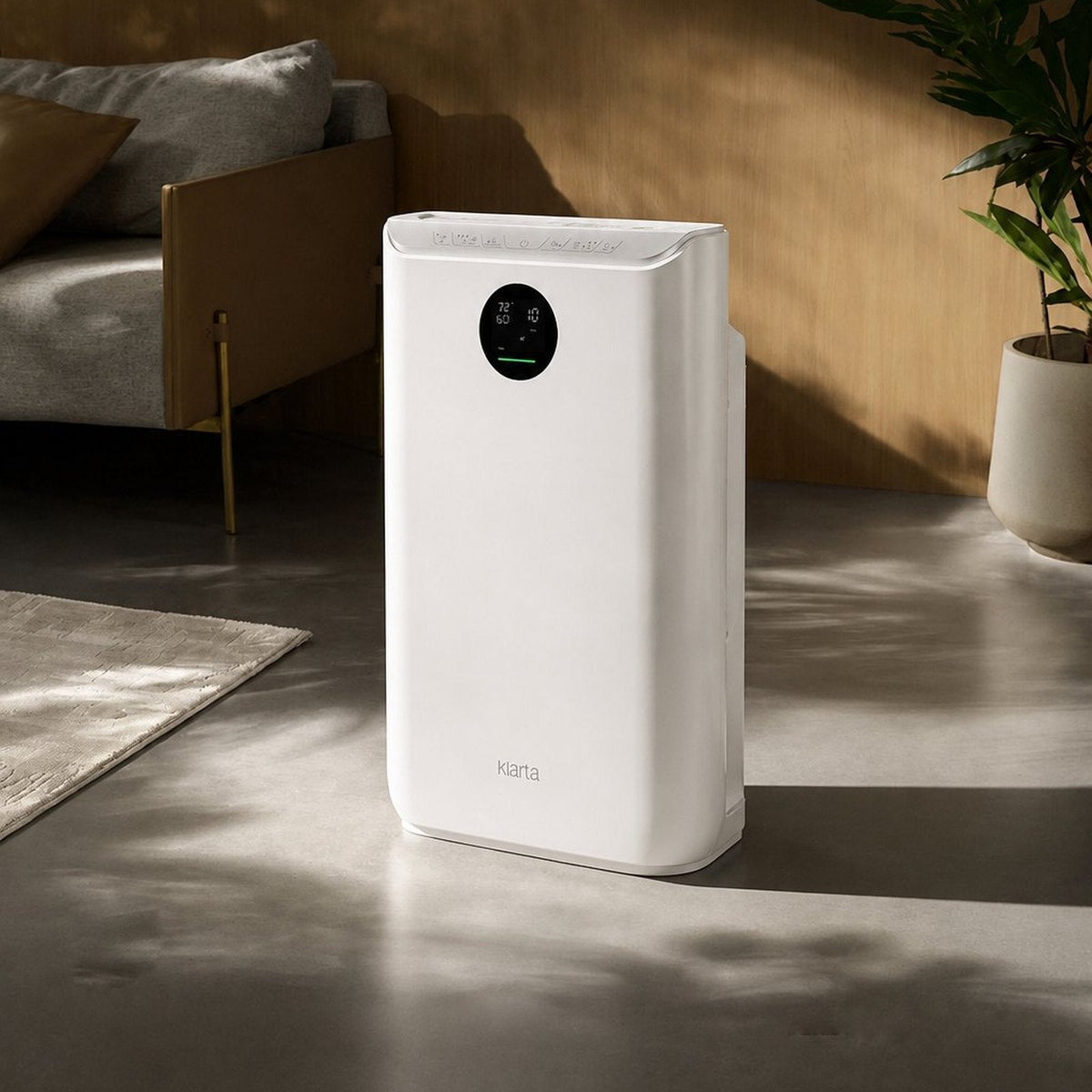

In most homes, yes, you can run a properly maintained mechanical-filter air purifier all day. In fact, continuous operation is usually the most effective way to reduce airborne particles because new dust, pollen, pet dander, smoke and cooking particles continually enter or develop inside the room.
An air purifier does not clean a room once and keep it clean permanently. It works only while its fan pulls air through the filter. When the purifier turns off, filtration stops, but people, pets, open doors, fabrics and outdoor air can continue adding particles.
That does not mean every purifier needs to run at full power around the clock. For most households, the best balance is to leave the unit on automatic or a low-to-medium speed during normal conditions, then increase the fan speed when pollution rises. This approach maintains steady filtration without creating unnecessary noise or energy use.
The right schedule depends on your room size, air-quality concerns, purifier capacity, outdoor conditions and electricity rate. Here is how to decide what makes sense for your home.
Is it safe to leave an air purifier on 24/7?
Most modern air purifiers that rely on mechanical filtration are designed for extended operation when they are used according to the manufacturer’s instructions. Continuous use is generally reasonable when the device is in good condition, has clear airflow and is connected to an appropriate outlet.
The filtration technology matters. The U.S. Environmental Protection Agency recommends avoiding air cleaners that intentionally produce ozone because ozone is a lung irritant. Some ionizers, electrostatic precipitators, plasma devices and improperly designed ultraviolet systems can also emit ozone.
For everyday home use, look for a purifier that uses mechanical filtration, such as a pre-filter, a fine particle filter and an activated carbon layer, without intentional ozone generation. California residents should also check the state’s official list of CARB-certified air-cleaning devices.
CARB certification addresses ozone emissions and electrical safety. It does not prove that a purifier is effective for every room or pollutant, so CADR and room sizing still matter.
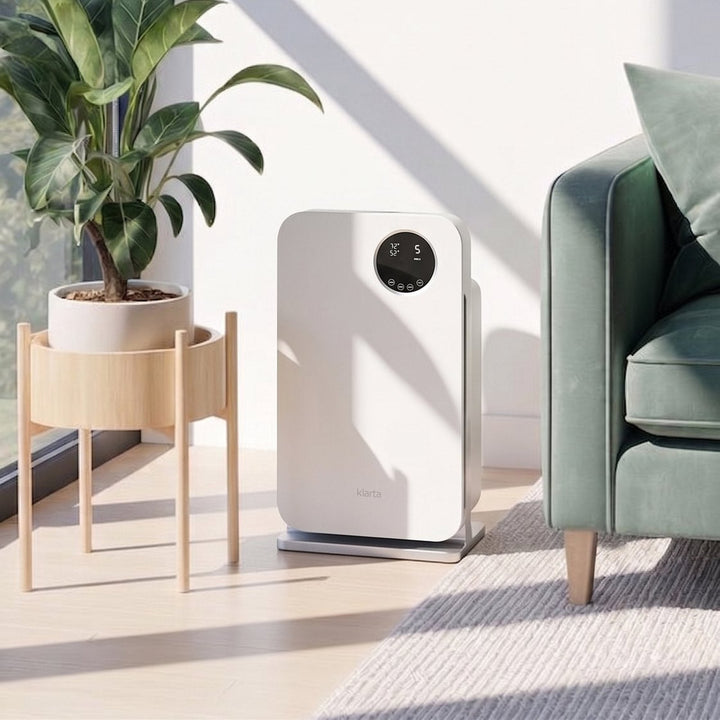
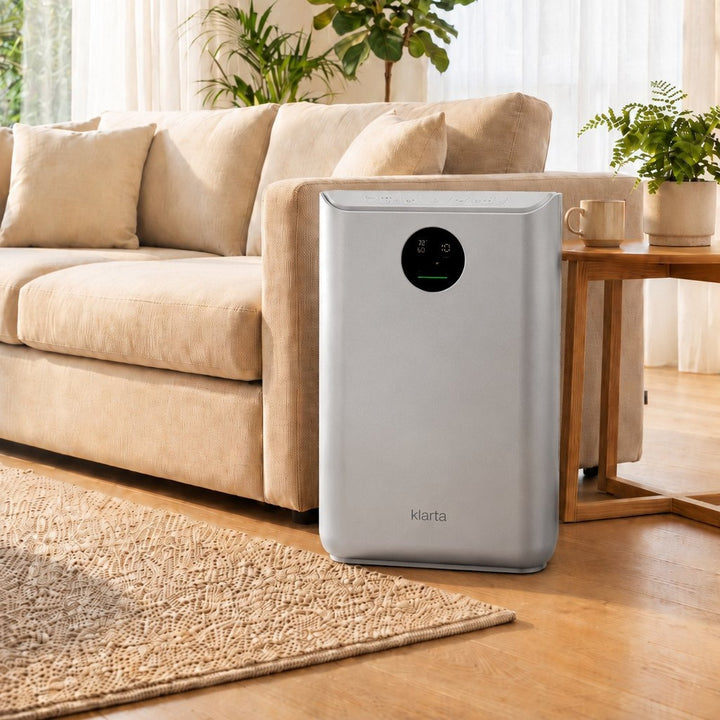
Klarta Forste and Stor use mechanical filtration. Both combine a fine particle filter with activated carbon to address airborne particles and certain household odors.
Even with a suitable purifier, basic safety practices still apply:
-
Place the purifier on a stable, dry surface.
-
Keep the air intake and outlet clear of walls, curtains, blankets and furniture.
-
Do not cover the unit while it is operating.
-
Keep it away from sinks, showers, humidifier output and other moisture sources.
-
Inspect the cord and plug periodically for damage or unusual warmth.
-
Plug it in as directed by the manufacturer rather than using overloaded power strips or unsuitable extension cords.
-
Replace filters on schedule and sooner if heavy smoke or dust causes visible loading.
-
Stop using the unit if it develops a burning smell, unusual heat, sparking or electrical damage.
Read the manual for your specific model because clearance, placement and electrical requirements can differ.
Why continuous operation is usually more effective

Air pollution is not a one-time event. Even after a purifier lowers particle levels, the room can quickly receive more pollution from:
-
Outdoor pollen or smoke entering through doors and windows
-
Pet dander and hair moving from furniture and flooring
-
Dust disturbed by walking, cleaning or making the bed
-
Fine particles released during cooking
-
Candles, fireplaces and other combustion sources
-
Traffic pollution entering through small gaps
-
People moving between rooms
The EPA explains that the longer an air cleaner runs, the more air it filters. That is the main argument for leaving an appropriately sized purifier on instead of switching it on only after the room already feels dusty or smoky. Read the EPA’s Guide to Air Cleaners in the Home.
Continuous filtration is especially useful when:
-
Someone in the household is sensitive to pollen, dust or pet dander
-
A pet spends most of the day indoors
-
Outdoor air quality is poor
-
Wildfire smoke is affecting the area
-
The home is near a busy road or industrial source
-
Cooking frequently creates particles or lingering odors
-
The purifier is used in a bedroom overnight
During wildfire-smoke events, the EPA recommends running a correctly sized portable air cleaner continuously on its highest practical setting in the designated cleaner-air room. During ordinary conditions, automatic or lower-speed operation may be enough.
How much does it cost to run an air purifier all day?
Air purifiers usually consume far less electricity than heating and cooling systems, but the exact cost depends on wattage, speed, hours of operation and your electricity price.
Use this formula:
Monthly cost = watts ÷ 1,000 × hours per day × 30 × electricity rate per kWh
The U.S. Energy Information Administration reports that the average residential electricity price was 17.30 cents per kilowatt-hour in 2025. Local rates vary substantially, so check your utility bill for a more accurate calculation. You can also review the EIA’s current electricity-price data.
Estimated monthly electricity cost at 17.3 cents per kWh
| Power use | 8 hours per day | 12 hours per day | 24 hours per day |
|---|---|---|---|
| 5 W | $0.21 | $0.31 | $0.62 |
| 41 W | $1.70 | $2.55 | $5.11 |
| 70 W | $2.91 | $4.36 | $8.72 |
These are estimates, not guaranteed operating costs. Automatic mode changes fan speed as particle levels change, so actual consumption can fall between the minimum and maximum figures.
The Klarta Forste Smart Air Purifier uses approximately 5 to 41 watts, depending on speed. At the national-average rate used above, operating continuously would cost roughly $0.62 per month at 5 watts or $5.11 per month if it drew 41 watts continuously.
The Klarta Stor Smart Air Purifier uses approximately 5 to 70 watts. Continuous operation would cost roughly $0.62 per month at 5 watts or $8.72 per month at 70 watts.
In real life, a purifier in automatic mode does not necessarily stay at maximum wattage. It may increase power when it detects elevated particles, then return to a lower speed after conditions improve. That can make automatic mode a sensible balance between filtration, noise and cost.
Should you run an air purifier on high all day?
Not necessarily. The highest speed delivers the most airflow and typically the highest CADR, but it also creates more noise and consumes more energy.
Use high speed when:
-
Outdoor AQI worsens
-
Wildfire smoke is present
-
You are cooking or cleaning
-
A door or window has been open during high-pollen conditions
-
Guests or pets increase activity in the room
-
You need to reduce an elevated particle reading quickly
Use automatic or medium speed during normal occupied hours. Use a quiet low or sleep setting overnight if it provides enough airflow for the room and makes consistent use more comfortable.
A purifier running quietly at a sustainable speed every day can be more useful than one that runs at maximum for a short burst and then stays off. The exception is a serious smoke event, when higher continuous airflow may be needed.
Should you turn the purifier off when you leave home?
You do not usually need to turn it off solely because the room is unoccupied. Dust, outdoor particles and pet dander can still accumulate while you are away. Leaving the purifier on low or automatic mode allows it to maintain cleaner air before you return.
If the home will be empty for an extended period, turning the purifier off can save energy. Consider leaving it running when:
-
Pets remain inside
-
Outdoor smoke or pollen is high
-
The home has known particle sources
-
You want to return to a filtered bedroom or living area
Smart scheduling can help. Run the purifier continuously during high-need periods, reduce the speed during low-activity hours and increase it before occupants return.
Should you run an air purifier while sleeping?

Yes, overnight use is one of the most practical ways to use an air purifier. You spend several uninterrupted hours in the bedroom, while bedding, carpeting, curtains and pets can contribute particles to the space.
Place the purifier where air can circulate freely, several feet from the bed when possible. Avoid directing the outlet straight at your face if the airflow feels uncomfortable. Keep the intake away from curtains and loose bedding.
The purifier should also be correctly sized. A very small unit on its quietest setting may not move enough air for a large bedroom. Compare the room’s area and ceiling height with the purifier’s CADR rather than relying only on a broad maximum-coverage claim.
Forste is designed for bedrooms, offices and smaller living areas, with a CADR of up to 300 m³/h and quiet operation beginning around 24 dB. Stor offers a CADR of up to 600 m³/h for larger rooms and open spaces.
Does running an air purifier all day wear out the filter faster?
Longer operation moves more air through the filter, so it can contribute to faster loading. However, runtime is only one factor. Filter life also depends on:
-
Indoor and outdoor particle levels
-
Wildfire smoke exposure
-
Pet hair and dander
-
Cooking frequency
-
Household dust
-
Fan speed
-
Pre-filter cleaning
-
Room size
A lightly used purifier in a smoky environment can load its filter faster than a continuously running purifier in a cleaner room.
Check the filter indicator, but also inspect the filter itself. Replace it if airflow declines, the filter is visibly loaded, persistent odors return or the manufacturer’s recommended interval has arrived. During heavy smoke, the EPA notes that filters may need replacement more frequently than the normal schedule.
Do not try to wash a disposable particle filter unless the manufacturer explicitly says it is washable. Moisture or aggressive cleaning can damage the filter media and reduce performance.
Does an air purifier replace ventilation or cleaning?
No. An air purifier should support source control, ventilation and surface cleaning rather than replace them.
When outdoor air is clean, ventilation can help dilute indoor pollutants. When smoke, pollen or outdoor pollution is high, keep windows closed and rely more heavily on filtration.
Continue to:
-
Use a vented range hood while cooking
-
Vacuum and damp-dust regularly
-
Wash pet bedding
-
Address leaks and moisture problems
-
Avoid smoking indoors
-
Reduce candles and other particle-producing sources
-
Clean or replace HVAC filters on schedule
An air purifier may capture some airborne mold particles, but it cannot fix the moisture source causing mold growth. It can reduce airborne pet dander, but it cannot remove hair and allergens already settled on upholstery or flooring.
How to get the best results from all-day operation

1. Size the purifier correctly
Choose a CADR appropriate for the full room or connected area. If the purifier is undersized, running it longer cannot fully compensate for inadequate airflow.
2. Put it in the room you use
A purifier in an empty hallway is less useful than one in the bedroom, living room or office where you spend hours. Separate closed rooms may need separate units.
3. Keep airflow open
Do not hide the unit behind a sofa or inside a cabinet. Leave the manufacturer-recommended clearance around all intakes and outlets.
4. Use automatic mode strategically
Automatic mode can raise the fan speed when particle levels increase and lower it when the air improves. It is a practical everyday setting when the purifier’s sensor and automatic controls are appropriate for your needs.
5. Increase speed before and during pollution events
Turn the purifier up while cooking, cleaning or preparing for wildfire smoke. Starting before conditions become severe gives the unit more time to reduce background particles.
6. Maintain the filters
Clean the pre-filter if the manufacturer permits it, inspect the main filter and replace filters on schedule. A clogged filter restricts airflow and reduces the value of extended operation.
When should you turn an air purifier off?
Turn the purifier off and inspect it if you notice:
-
A burning or electrical smell
-
A damaged or unusually hot cord or plug
-
Sparking, smoke or unusual heat
-
Water exposure
-
A new mechanical grinding sound
-
Airflow that has dropped sharply despite filter maintenance
Also turn it off before moving the unit, performing maintenance or replacing the filter, following the product manual.
The bottom line
For most homes, running a suitable mechanical-filter air purifier all day is safe and more effective than using it only occasionally. Continuous airflow helps manage the steady return of dust, pollen, dander, smoke and other airborne particles.
You do not have to run it at full power every minute. Leave it on automatic or a moderate speed during ordinary conditions, use a quiet setting overnight and increase airflow during cooking, cleaning, high-pollen days or wildfire smoke.
Electricity cost is usually manageable. Based on a 17.3-cent electricity rate, continuous operation across Klarta’s published 5-to-70-watt range works out to approximately $0.62 to $8.72 per month. Your actual cost will depend on the model, speed and local utility rate.
For bedrooms, offices and smaller rooms, explore the Klarta Forste Smart Air Purifier. For large living rooms and open spaces, compare the Klarta Stor Smart Air Purifier.
Compare power use, noise levels and automatic modes across our Klarta air purifiers to choose a model for your daily routine.
The most effective schedule is the one that keeps enough filtered air moving through the right room, without creating so much noise or inconvenience that you stop using the purifier.
Frequently asked questions
Can I leave an air purifier on when no one is home?
Yes, provided the purifier is designed for extended use, is in good working condition and is operated according to its instructions. Low or automatic mode can maintain filtration while you are away. Turn it off for long absences if continued filtration is unnecessary.
Is it expensive to run an air purifier 24 hours a day?
Usually not compared with large household appliances. At 17.3 cents per kWh, a 5-watt purifier costs about $0.62 per month to operate continuously, while a 70-watt purifier costs about $8.72. Local electricity rates and actual fan speed will change the result.
Is it better to run an air purifier continuously or in intervals?
Continuous operation provides steadier filtration because airborne particles continue entering the room. Automatic mode is a practical compromise because it can reduce fan speed when particle levels are lower.
How long does it take an air purifier to clean a room?
There is no single answer. It depends on the purifier’s CADR, room volume, fan speed, starting pollution level and continuing pollution sources. A correctly sized purifier can lower airborne-particle levels relatively quickly, but it must keep operating to manage new particles.
Should I open windows while the air purifier is running?
Open windows when outdoor air is clean and ventilation is beneficial. Keep them closed during wildfire smoke, high pollen or poor outdoor air quality because open windows can continually introduce more particles.
Can an air purifier overheat if left on all day?
A properly designed and maintained purifier should be capable of extended use, but any electrical device can develop a fault. Keep vents clear, inspect the cord, avoid moisture and stop using the unit if you notice unusual heat, odor or damage.
Share:
Read also
Running your device
Can You Wash an Air Purifier Filter?
Running your device
5 Common Mistakes of Air Purifier Users - Klarta
Running your device
Can You Sleep With an Air Purifier On?

Comments