Air Purifier for Wildfire Smoke: How to Choose and Use One
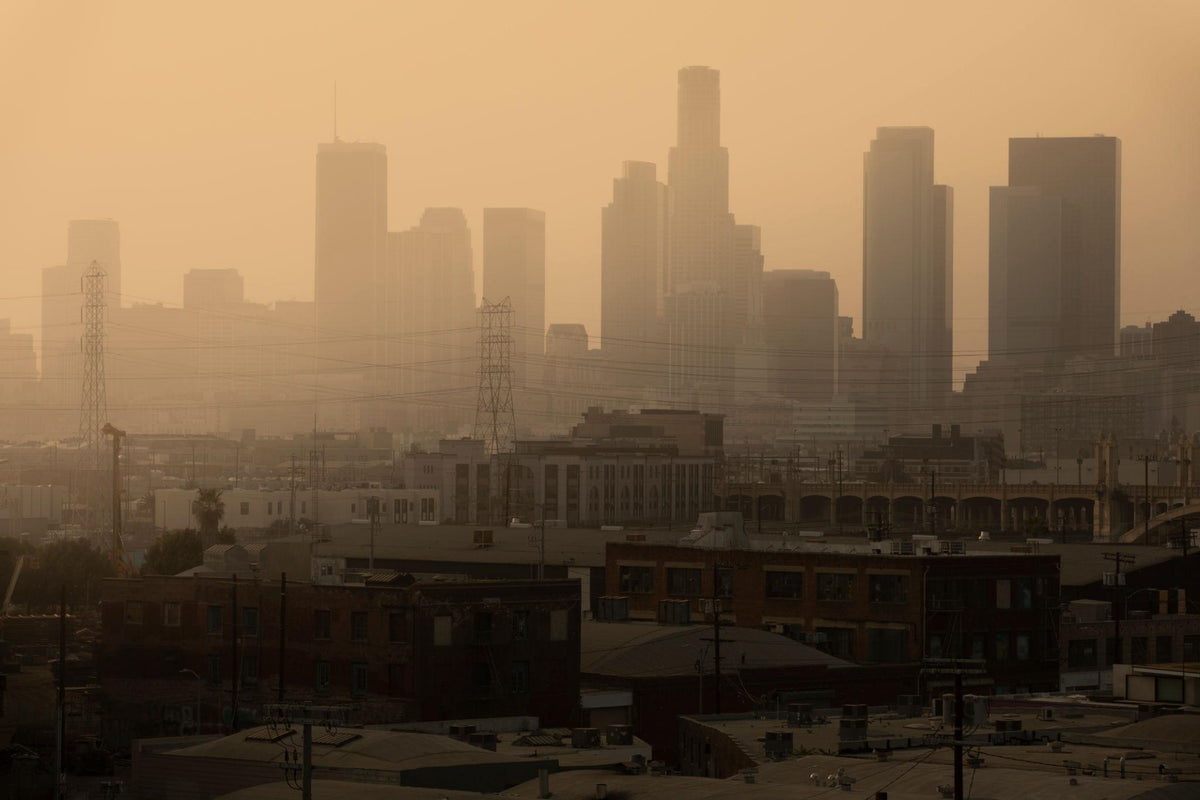
An appropriately sized air purifier can reduce airborne wildfire smoke particles indoors. Choose around particle-cleaning performance, the room it will serve and a fan setting you can keep using. No portable purifier removes every smoke pollutant or replaces evacuation advice.
If smoke inside is unexplained or you suspect a fire, leave and call 911 from outside. Our guide to a smoky smell with no visible fire explains why identifying the source comes first.
Does an air purifier help with wildfire smoke?
It can help with the particle portion of smoke that passes through the filter. Smoke also contains gases. A HEPA filter targets particles, while suitable activated carbon addresses certain gases. Neither the HEPA label nor a high particle CADR establishes that a device removes every gas.
Think of the purifier as one part of an indoor smoke plan. Reducing smoke entry, managing indoor sources and following local guidance remain necessary.


What to look for before buying
| Check | Question to ask |
|---|---|
| Particle CADR | Is the rating suitable for my room, and at what speed was it measured? |
| Coverage assumptions | What ceiling height and air changes per hour support the area claim? |
| Particle filter | What filter specification and maintenance instructions are provided? |
| Carbon or gas-filter media | Which gases have been tested, and how much media does the filter contain? |
| Daily operation | Can I tolerate the noise at the setting I intend to use? |
| Replacement filters | Can I obtain them readily during smoke season? |
Use CADR and room size together
The EPA's selection guide recommends sufficient CADR for the area being served. Where separate smoke, dust and pollen ratings are available, the smoke rating represents smaller test particles. Do not assume that an unlabeled airflow figure is an independently verified smoke CADR.
Measure the room and include connected open space. A large square-foot claim at one air change per hour is not equivalent to the same area at several air changes per hour. Our room-size guide explains this distinction.
Set up one room with usable, clear airflow
Choose a room where your household can spend time comfortably. The EPA's clean-room guidance describes keeping outdoor smoke out, avoiding indoor particle sources and running filtration. Keep the room cool enough to occupy and follow evacuation instructions.
Leave the purifier's intake and outlet open. Do not put it behind curtains or inside furniture. Use a higher fan setting when practical; a quiet sleep setting moves less air than a maximum setting. A low PM2.5 reading does not measure all smoke gases, so it should not be your only decision tool.
What about smoke odor and activated carbon?
Carbon can help with some odor-causing gases, but its capacity is finite and performance varies by pollutant and filter design. Particle CADR is not an odor-removal rating. Avoid promises of a smell-free house in a fixed number of minutes.
If the source has stopped but fabrics still smell, increasing fan speed will not wash them. Follow our smoke residue and odor cleanup guide. Rental hosts can also use the separate Airbnb smoke guide.
Maintain the purifier during smoke events
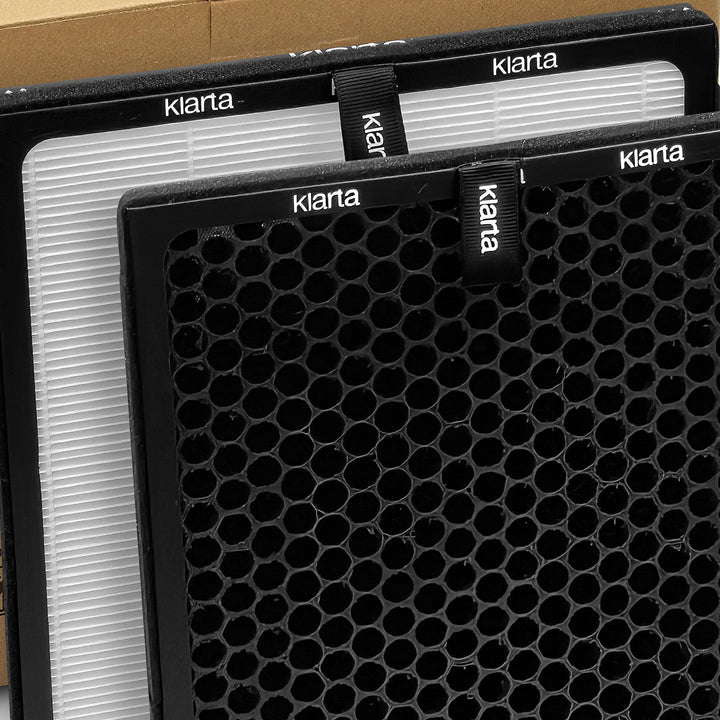
Inspect filters according to the manual and expect heavy smoke to increase their workload. Keep replacements available. Do not wash a non-washable HEPA or carbon filter to extend its life; see our filter care guide.
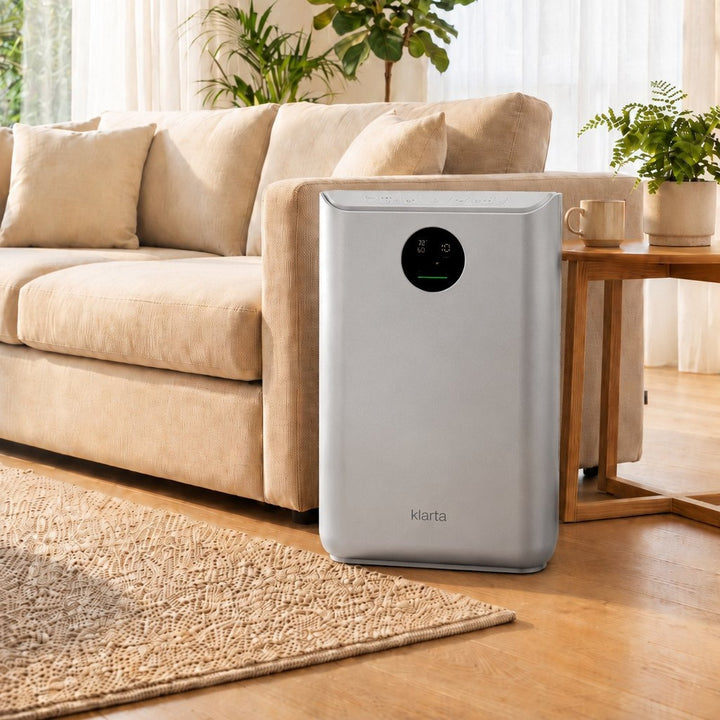
Klarta Forste and Stor sold in the USA do not have ionization. Compare current models in the Klarta air purifier collection using the room and operating setting you actually need. A purifier supplements a smoke-response plan; it cannot make an unsafe building safe.
For practical room layouts, see where to put an air purifier. For the difference between cooking, pet and smoke odors, read whether air purifiers remove odors.
Share:
Read also
Wildfire smoke
Air Purifier for Airbnb Smoke: A Host's Practical Guide
Wildfire smoke
Why Does My House Smell Like Smoke With No Fire?
Wildfire smoke
How to Get Smoke Smell Out of Your House: A Practical Cleanup Guide

Comments