Air Purifiers for Cats and Dogs: Dander, Hair and Allergies

An air purifier can help capture airborne particles carrying cat or dog allergens, but it cannot remove every allergen or guarantee relief from symptoms. It also cannot collect all the hair from your sofa or clean the pet bed. Start by separating three concerns: airborne allergens, visible hair and odors.
Pet dander is different from pet hair
The American College of Allergy, Asthma & Immunology explains that pet allergy involves proteins found in sources including skin flakes, saliva and urine. Fur can carry allergens, but the visible hairs are not the whole issue. Cat and dog allergens can also remain on furnishings and clothing.
That is why picking up hair and filtering the air are separate jobs. A room can look tidy and still contain allergens. Conversely, visible hair on a rug does not tell you the concentration of airborne allergens.


What can a purifier do in a home with pets?
| Concern | Useful approach | Limit |
|---|---|---|
| Airborne dander and allergen-carrying particles | Particle filtration sized to the room | Does not clean allergens out of upholstery |
| Hair on floors and furniture | Vacuuming and regular textile cleaning | A purifier is not a substitute for a vacuum |
| Pet bed or litter-area smells | Source cleaning and appropriate ventilation; carbon may supplement | Particle filters alone do not capture odor gases |
How to choose an air purifier for cat or dog allergies
Measure the room where you intend to use it. Compare particle CADR with the area and ceiling height rather than choosing solely from a “pet” label. If a living room connects to a dining room, include that open space. Our sizing guide explains how to compare coverage claims.
Check three everyday details before deciding: whether you can tolerate the sound at a useful speed, whether you can reach the pre-filter for cleaning, and whether replacement filters are readily available. Hair and lint make regular pre-filter checks especially useful in a pet household.
Klarta Forste and Stor sold in the United States do not have ionization. Compare their current filtration, controls and room-size specifications in the air purifier collection. No model should be presented as a cure for pet allergy.
Where should it run when you have a cat or dog?
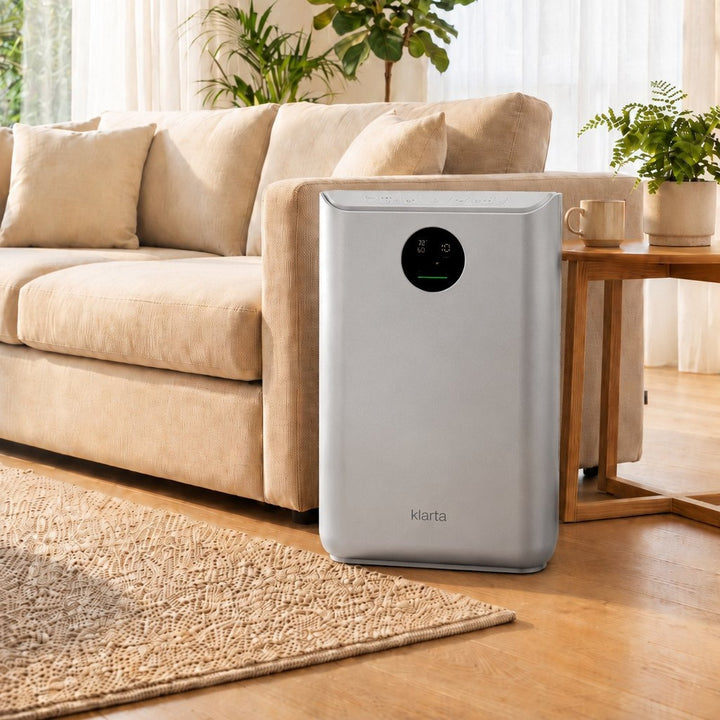
Choose the room you are trying to manage, with a stable position and clear intake and outlet. Do not hide the purifier behind the pet bed or let blankets drape over it. Route the cord away from walking paths and where pets may chew or pull it. Keep food, drinking water and litter away from the appliance.
For a bedroom, choose settings that support comfortable overnight use. Read our nighttime guide. If allergy is a concern, ACAAI recommends keeping pets out of the bedroom; adding filtration does not replace that exposure-reduction step.
A cleaning routine that complements filtration
- Wash pet bedding and washable covers according to their labels.
- Vacuum floors, upholstery and the places where hair accumulates.
- Clean litter areas and accidents promptly with products appropriate for the surface and pet household.
- Inspect the purifier's pre-filter and maintain it according to the manual.
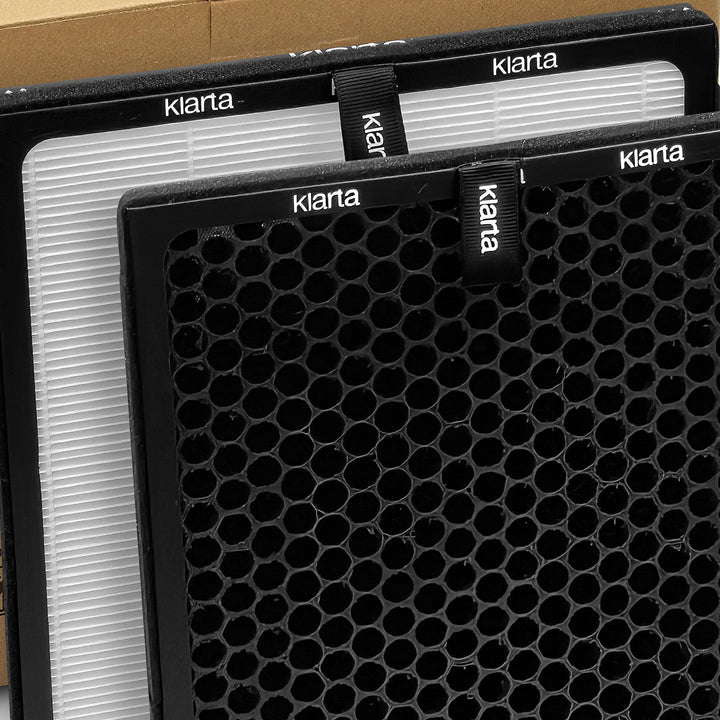
- Replace HEPA and carbon filters as directed; do not wash a filter unless its instructions explicitly permit it.
Keep cleaning supplies secured and follow their labels. Avoid adding fragrances to purifier filters. For maintenance details, see our filter cleaning guide.
Will an air purifier stop my allergy symptoms?
There is no reliable promise that it will. The EPA's review of air filtration describes variable results for allergy symptoms. Airborne particle reduction and symptom relief are different outcomes. An allergist can help identify your triggers and plan care if symptoms persist.
Can one purifier handle several pets or multiple rooms?
There is no universal “one purifier per pet” rule. Start with the room, its connections to other spaces and the sources you need to manage. Closed doors limit airflow between rooms. More pets can also mean more cleaning and filter maintenance, so review the actual household routine instead of relying on a pet count alone.
For practical room layouts, see where to put an air purifier. For the difference between cooking, pet and smoke odors, read whether air purifiers remove odors.
Share:
Read also

Dust & allergens
Why Is My Room So Dusty? 10 Causes and Practical Fixes

Dust & allergens
Can Air Purifiers Help With Allergies? What the Science Says

Dust & allergens
Why Is My Room Dusty Every Day? A Practical Cleaning Routine

Comments